Total Pageviews

Monday, 28 May 2012

Babesiosis

- tick-borne malaria-like illness caused by parasite of genus Babesia
- Babesia microti is the cause of babesiosis in northeastern United States
- intraerythrocytic Babesia destroy the red blood cells causing hemolytic anemia and hemoglobinuria
- mild illness presents with malaise, fatigue, weakness, fever, chills, sweat, headache, myalgia, anorexia, dry cough, arthralgia and nausea
- post-splenectomy, HIV, malignancy and immunosuppression are at risk of severe illness
- symptoms are greater with higher percentage of parasitism
- diagnosed by microscopic examination of Giemsa-stained thin blood smears - round or pear-shaped organism
- asymptomatic need not be treated
- mild illness: oral atovaquone + azithromycin for 7 - 10 days
- severe illness: IV clindamycin + oral quinine for 7 - 10 days

Stiff person syndrome

- spontaneous discharge of the motor neurons of the spinal cord cause involuntary muscle contractions mainly involving the axial (trunk) and proximal lower extremity muscles
- gait becomes more stiff and labored, with hyperlordosis of lumbar spine
- superimposed episodic muscle spasms are precipitated by sudden movements, unexpected noises and emotional upset
- serum antibodies against glutamic acid decarboxylase are present in approximately 2/3 of cases
- treatment is mostly palliative with muscle relaxant with potentiate GABA actions (such as benzodiazepines)

Saturday, 26 May 2012

Calciphylaxis

- calcific uremic arteriolopathy seen almost exclusively in patients with advanced CKD
- heralded by livedo reticularis and advances to patches of ischemic necrosis especially on the legs, thighs, abdomen and breasts
- pathologically, there is vascular occlusion associated with extensive vascular (calcification of tunica media) and soft tissue calcification
- warfarin is a risk factor of calciphylaxis ( because warfarin decrease vitamin K dependent regeneration of matrix GLA protein which is important in preventing vascular calcification)
- optimal treatment is prevention, with rigorous and continuous control of phosphate and calcium balance
- no specific treatment

Allergic interstitial nephritis (AIN)

- classically presents with fever, rash, peripheral eosinophilia and oliguric renal failure after 7 - 10 days treatment with methicillin or another B-lactam antibiotics
- atypical reactions can occur with NSAIDs in which fever, rash and eosinophilia are rare but acute renal failure with heavy proteinuria is common
- urinalysis reveal pyuria with white blood cell casts and hematuria
- renal biopsy usually not required for diagnosis but reveals extensive interstitial and tubular infiltration of leukocytes, including eosinophils
- discontinuation of offending agent often leads to reversal of renal injury

Atrial fibrillation


- Should look for AF in patient who presents with dyspnea, palpitation, syncope/dizziness, chest discomfort, stroke/TIA
- In patient with permanent AF who need treatment for rate control, beta blocker or rate-limiting CCB should be preffer initial monotherapy, digoxin is considered in predominantly sedentary patient
- In patient with persistent AF considered for pharmacological cardioversion, Class Ic drug (flecainide or propafenone) should be drug of choice in the absence of structural heart disease and amiodarone in the presence of structural heart disease
- rate control strategy should be the preferred initial option in persistent AF patient with
  ~ age over 65
  ~ coronary heart disease
  ~ with contraindication to antiarrhythmic drug
  ~ unsuitable for cardioversion
  ~ without congestive heart failure
- rhythm control strategy should be the preferred initial option in persistent AF patient with
  ~ younger patient
  ~ symptomatic
  ~ presenting for first time with lone AF
  ~ those with AF secondary to a treated/corrected precipitant
  ~ with congestive heart failure
- patient should be maintained on therapeutic anticoagulation with warfarin to keep INR between 2.0-3.0 for minimum of 3 weeks before cardioversion and 4 weeks after cardioversion


Reference: NICE clinical guideline 36 Atrial fibrillation

Carotid sinus hypersensitivity (CSH)

- exaggerated response to carotid sinus stimulation
- diagnosis is made after ischemic heart disease and rhythm disturbance is excluded
- CSH may be predominantly cardioinhibitory (resulting in bradycardia), vasodepressor (resulting in hypotension) or mixture of both
- presents with recurrent dizziness, near syncope, syncope, unexplained falls (drop attacks), symptoms produced when wearing tight-fitting collar clothes or when taking carotid pulse
- cardioinhibitory CSH is managed with insertion of dual-chamber pacemaker and vasodilatory CSH is managed with support stocking, fludrocortisone and midodrine (alpha-1 agonist)

Friday, 25 May 2012

Adult onset Still disease

- rare form of inflammatory arthritis
- begins after the age of 16 years 
- diagnosis of exclusion
- serum ferritin is usually elevated
- RF and ANA are classically negative
- treatment: NSAIDs
- Yamaguchi's criteria

Echinococcosis

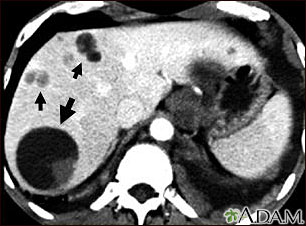
- infection caused by larval stage of Echinococcus granulosus complex (dog tapeworm), which produce unilocular cystic lesion
- slowly enlarging echinococcal cyst generally remain asymptomatic until their expanding size or their space occupying effect in an involved organ (commonly liver and lungs) elicits symptomss
- hydatid liver disease presents with right upper quadrant pain, palpable mass in right upper quadrant or bile duct compression resulting in jaundice
- calcification is often seen on abdominal X ray and ultrasound is excellent means of demonstrating the cyst
- the most pathognomonic finding if demonstrable is that of daughter cysts within the larger cyst
- diagnostic aspiration is not usually recommended because of risk of fluid leakage resulting in either dissemination or infection or anaphylactic reaction
- treatment: Albendazole or PAIR (percutaneous aspiration, infusion of scolicidal agent and reaspiration), or pericystectomy for complicated cyst

Thursday, 24 May 2012

Yersiniosis

- zoonotic infection with an enteropathogenic Yersinia species (Yersinia enterocolitica or Yersinia pseudotuberculosis)
- presents with abdominal pain and diarrhea
- can present with pseudoappendicitis (mesenteric adenitis)
- initial replication in small intestine is followed by invasion of Peyer's patches of distal ileum via M cells with onward spread to mesenteric lymph nodes
- gold standard for diagnosis is serology
- most cases of diarrhea are self limiting
- fluoroquinolone therapy is effective for bacteremia in adults

Wednesday, 23 May 2012

Relapsing polychondritis

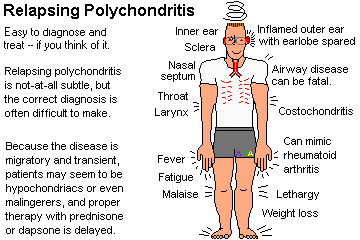
- characterised by inflammation of cartilage (ear, nose and laryngotracheobronchial tree)
- also manifested with scleritis, neurosensory hearing loss, polyarthritis, cardiac abnormalitis, skin lesion and glomerulonephritis
- most common in 5th decade
- systemic features such as fever, fatigue and weight loss precede the clinical signs by several weeks
- auricular chondritis is the most frequent presenting manifestation (40%), and eventually affecting 85% of patients
- typically involving pinna of ears and sparing earlobe because they do not contain cartilage
- treatment: prednisolone 40-60mg/day