Total Pageviews

Sunday, 13 May 2012

Cholesterol embolism syndrome

- should be suspected in any patients who develop worsening renal function, hypertension, distal ischemia or acute multisystem dysfunction after an invasive arterial procedure (eg:CABG), anticoagulation or thrombolysis
- triad of livedo reticularis, eosinophilia and acute renal failure
- may presents with unexplained fever, weight loss, myalgia and anorexia initially
- risk of patient developing cholesterol embolism can be reduced by using brachial or axillary approach  in patient known to have severely ulcerated aortic plaque, using soft flexible catheter and avoiding high pressure jets of contrast materials
- trash foot
- low C3 level, raised ESR/CRP, pyuria/eosinophiluria
- tissue biopsy: demonstration of cholesterol crystal in occluded arterioles is the only definitive test for cholesterol embolism
- management is supportive

  Figure 1

Neuroleptic malignant syndrome

- rare but life threatening, idiosyncratic reaction to a neuroleptic medication
- characterised by fever, muscular rigidity, dysautonomia (sweating, tachypnea, tachycardia and labile blood pressure) and altered mental status
- thought to be secondary to decreased dopamine activity in CNS either from blockade of dopamine D2 receptor or decrease availability of dopamine itself
- blockade of dopamine neurotransmission in nigrostriatum and hypothalamus results in muscular rigidity and altered thermoregulation
- most common cause are haloperidol, fluphenazine depot preparation and chlorpromazine
- high creatinine kinase and high white cell counts are seen
- complications include rhabdomyolysis and subsequent renal failure
- stop all neuroleptic, correct volume depletion and hypotension with IV fluid
- bromocriptine 5mg tds is the treatment of choice (dantrolene was formerly recommended as initial treatment of choice although recent studies suggest that it is associated with increased mortality when used without bromocriptine)

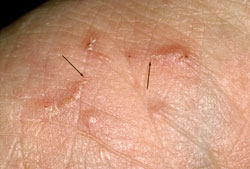
Scabies

- caused by Sarcoptes scabei, an arachnid
- transmitted by prolonged skin to skin contac with someone who has it
- fertilised female has to be transferred for infestation to take place, she will then find a place to lay eggs (burrow), 4-6 weeks later hypersensitivity rash occurs
- papular rash (on abdomen and medial thigh)
- itchy at night
- diagnosis is confirmed by one or more burrows (in digital web spaces and flexor wrist skin)
- treatment: 5% permethrin cream over whole body including scalp, face, neck and ears. Wash after 8-12 hours
- bedding, clothing and close contacts should be decontaminated (washing in hot water and drying in hot dryer)


Leptospirosis

- zoonotic disease caused by spirochetes of genus Leptospira
- most important source of transmission to humans are rats, dogs, cattle and pigs
- flooding is a major risk for epidemic severe disease. Military training, outdoor athletic activities and adventure travel have led to recognised outbreaks and spradic cases of leptospirosis
- Leptospires infect humans through the mucosa or macerated, punctured or abraded skin
- incubation period averages 5-14 days
- leptospirosis is classically described as biphasic
 ~ leptospiremic phase: acute fever lasts for 3-10 days (blood culture postive up to day 4 of illness)
 ~ immune phase : fever not responsive to antibiotic but leptospires can be isolated from urine
- conjunctival suffusion, pharyngeal edema without exudate, muscle tenderness (esp calves), rash, jaundice or signs of meningism
- Weil's disease is characterised by jaundice, acute renal failure, hypotension and hemorrhage (usually pulmonary), aseptic meningitis, cholecystitis, acute abdomen and pancreatitis
- diagnosis is by serologic assay
- treatment: oral doxycycline 100mg bd for mild infection, IV penicillin G 1.5 mega unit QID for severe infection
- chemoprophylaxis: oral doxycycline 200mg once a week

acquired hemophilia

- FVIII is the most common target of antibody formation against specific clotting factor
- occurs predominantly in older adults (median age of 60)
- 50% idiopathic, others are associated with autoimmune disease, malignancy and pregnancy
- bleeding episodes occur commonly in soft tissues, GI or urinary tracts, haemarthrosis is rare
- prolonged APTT with normal PT
- Bethesda assay using FVIII deficient plasma as performed for inhibitor detection will confirm the diagnosis
- treatment with factor VIII is ineffective as the inhibitor has rapid activity
- bleeding is treated with recombinant activated factor VII or FEIBA(factor eight bypassing agent)

Thursday, 10 May 2012

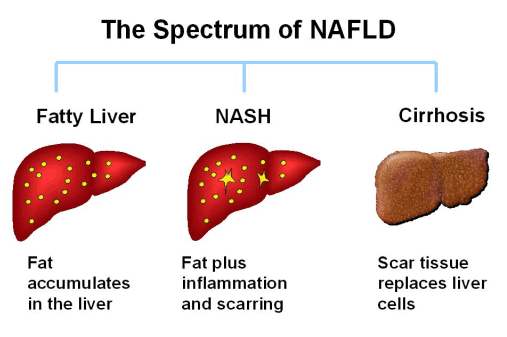
Non alcoholic fatty liver disease (NAFLD)

- prevalence range from 14-20%
- should always be considered in obese individuals with abnormal liver function test (raised ALT or AST) without evidence of alcohol excess
- often asymptomatic but hepatic enlargement due to lipid deposition within hepatocyte (making them appear bright on ultrasound) can lead to RUQ pain
- abnormal ferritin values are seen in 50% of patients with NASH, and may be a marker of insulin resistance in NASH
- liver biopsy: macrovesicular steatosis with occasional microvesicular fat
- rapid weight loss has been shown to increase fat deposition in liver and precipitate NASH
- weight loss of 1kg/week and exercise with an initial target loss of 10% bodyweight has been shown to be effective at restoring normal liver function


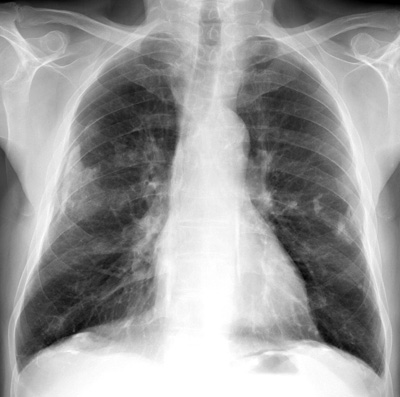
Asbestosis

- caused by inhalation of asbestos fibres
- asbestos used in building trade for fire proofing, pipe lagging, electrical wire insulation and roofing felt
- chrysotile (white asbestos) - least fibrogenic
- amosite (brown asbestos) - intermediate fibrogenicity, least common
- crocicolite (blue asbestos) - most fibrogenic
- presents with progressive dyspnea, clubbing and fine end inspiratory crackles
- causes pleural plaques
- increased risk of bronchial adenocarcinoma and mesothelioma
- mesothelioma can be diagnosed by thoracoscopy and biopsy

Monday, 7 May 2012

Paracetamol poisoning

- 150mg/kg or 12gm in adult may be fatal
- PCM overdose causes hepatic injury through its reactive metabolit (NAPQI), which is normally rapidly detoxified by glutathione in liver cells. In PCM overdose, NAPQI production exceeds glutathione capacity and the metabolite reacts directly with the hepatic macromolecules causing liver injury
- treatment includes oral activated charcoal within 3-4 hours of ingestion
- antidote: N-acetylcysteine or methionine if allergic to NAC
- criteria for transfer to liver unit
 ~ encephalopathy or raised ICP
 ~ INR >2.0 at <48hours or INR>3.5 at <72hours (so measure INR every 12hours)
 ~ renal impairment (creainine > 200 μmol/L)
 ~ blood pH < 7.3 (lactic acidosis)
 ~ systolic BP < 80mmHg
- liver markers are poor indicator of hepatocyte death
- King's college criteria for liver transplantation
~ arterial pH < 7.3 or lactate >3.0 after adequate fluid resuscitation
~ or if all three of the following occurs in first 24 hours
   i) creatinine > 300
   ii) PT > 100 or INR > 6.5
   iii) grade III/IV encephalopathy

Parkinson's disease

- degeneration of dopaminergic neurons in the substantia nigra pars compacta associated with Lewy bodies, causes reduced striatal dopamine levels
- 3 cardinal signs : resting tremor, rigidity and bradykinesia
- 2 of 3 including bradykinesia are required to make a clinical diagnosis
- medical therapy of PD
 ~ Levodopa 
    - for older patient
    - risk risk of disease acceleration and motor fluctuations & dyskinesia
 ~ Dopamine agonist (ropinirole, pramipexole)
    - for younger patients
    - used as monotherapy to delay starting L-dopa in early stage of PD
    - lower risk of dyskinesia
 ~ COMT inhibitor (entacapone)
 ~ MAO-B inhibitor (selegiline)
 ~ anticholinergic (benzhexol) - improve tremor and sialorrhea
 ~ apomorphine
- DaT (dopamine transporter) scan helps to differentiate PD from essential tremor
- deep brain stimulation or pallidotomy when medical therapy fails

Sunday, 6 May 2012

Chronic lymphocytic leukemia (CLL)

- accumulation of mature B cells that have escaped apoptosis and undergone cell cycle arrest in the G0/G1 phase
- commonest leukemia
- often asymptomatic, incidentally diagnoses on routine FBC
- may be anemia, infection prone, weight loss, night sweats and anorexia
- blood smear : smudge cells
- complications includes AIHA, frequent infections (hypogammaglobulinemia) and marrow failure
- death is often due to infections (pneumococcus, haemophilus, meningococcus, candida or aspergillosis) or transformation to aggressive lymphoma (Richter's syndrome)
- if asymptomatic - periodic follow up
- indications for chemotherapy (Fludarabine) * to give with co-trimoxazole for PCP prophylaxis
   ~ night sweats, fever, rapid weight loss, progressive marrow failure, symptomatic splenomegaly
- supportive care (transfusion or IVIG if recurrent infections), steroids for AIHA
- positivity to ZAP (zeta associated protein) 70 is associated with poorer prognosis