Total Pageviews

Sunday, 9 October 2011

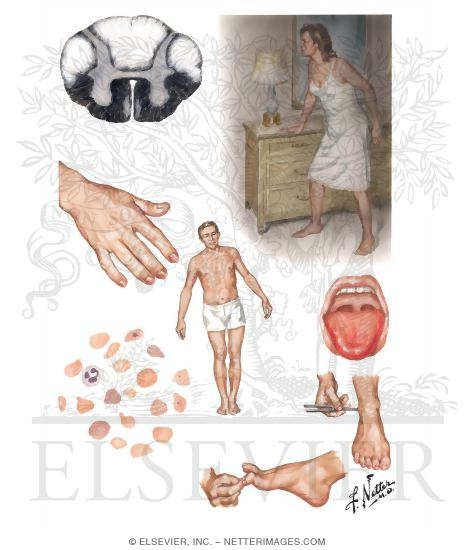
Subacute combined degeneration of cord

- a.k.a Lichtheim disease
- due to vitamin B12 (cobalamin) deficiency, usually associated with pernicious anemia
- associated with chronic nitrous oxide exposure (interfere with methionine synthetase)
- causes classic combination of slowly evolving spastic paraparesis (long tract sign), peripheral neuropathy (absent ankle jerk) and posterior column cord damage (loss of vibration sense and propioception)
- presents with weakness of legs, arms, trunk, tingling and numbness, memory problems, decreased visual acuity (optic neuritis)
- serum B12 less than 100pg/ml and increased level of methyl malonic acid and homocysteine
- MRI: increased T2-weighted signal in posterior column


Differential diagnosis of absent ankle jerk (LMN lesion) + extensor plantar (UMN lesion)
- subacute combined degeneration of cord
- motor neurone disease
- tabes dorsalis (syphilis)
- Friedriech's ataxia
- lesion of cauda equina
- diabetes with CVA
- anterior spinal artery thrombosis affects corticospinal tracts and spinothalamic tracts
- cerebrotendinous xanthomatosis (dementia, gait ataxia, loss of vibration sense, cataracts, tendon xanthoma)

Weber's syndrome

- ipsilateral 3rd nerve palsy with contralateral hemiparesis
- unilateral infarct in midbrain (ventral lesion) due to occlusion of branch of basilar artery


Other 3rd nerve brainstem syndrome
Nothnagel's syndrome = 3rd nerve palsy + cerebellar ataxia
Benedikt's syndrome = 3rd nerve palsy + contralateral hemitremor
Claude's syndrome = 3rd nerve palsy + cerebellar ataxia + hemitremor

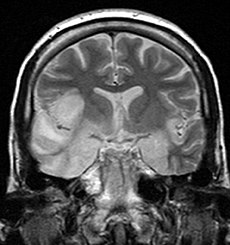
sporadic cJD

- affects older age (peak incidence 7th decade), as opposed to variant cJD (younger age)
- presents with rapidly progressive dementia with associated neurological signs (cerebellar ataxia and visual dysfunction)
- myoclonic jerks are characteristic
- typical EEG changes (1Hz periodic discharge)
- positive CSF result for 14-3-3 protein
- progression to akinetic mute state followed by death (2/3 die within 6 months)

Herpes simplex encephalitis

- caused by HSV-1 in 90% cases
- temporal lobe changes on neuroimaging is typical (lesions are often hemorrhagic)
- diagnosis is by CSF PCR for HSV
- treatment: IV aciclovir


Mycobacterium avium intracellulare

- saprophytic organism of low pathogenicity and ubiquitous in soil and water
- occurs in later stage of HIV infection when patient are profoundly immunosuppressed
- presents with fever, malaise, weight loss, anorexia, anemia (dissemination to bone marrow), diarrhea and malabsorption, generalised lymphadenopathy, tender hepatosplenomegaly
- in immunocompetent person, it causes pulmonary infection (Lady Windermere syndrome)
- diagnosis: culture from blood or bone marrow
- primary prophylaxis with azithromycin when CD4 count less than 50
- treatment: ethambutol, rifabutin and clarithromycin

Yellow fever

- caused by flavivirus
- confined in Africa and South America
- transmitted by A.africanus (Africa) and Haemagogus (America)
- severe flu like illness with high grade fever, epigastric discomfort, relative bradycardia (Faget's sign) followed by an apparent recovery
- following the apparent recovery, patient develops high fever, jaundice, hepatomegaly, ecchymosis, gum bleeding, hematemesis and melena.
- mortality up to 40%
- treatment: supportive

Live vaccine

Live vaccines (to be avoided in immunocompromised patient)

" MMR BOY"

MMR : measles, mumps, rubella
B : BCG
O : oral polio (Sabin), oral typhoid
Y: yellow fever

Anthrax

- caused by gram positive aerobic bacillus - Bacillus anthracis
- cutaneous anthrax (most common form) commonly causes a painless, black indurated eschar (without pus), associated with marked edema
- mortality from cutaneous disease is 20%, whereas 90% for inhalational antrax is untreated
- gastrointestinal anthrax is due to consumption of undercooked, contaminated meat, can present with GI bleeds
- diagnosis: smear from cutaneous lesion or serological confirmation
- inhalational anthrax is associated with a poor yield from sputum culture with greatest yield from blood culture.
- treatment: ciprofloxacin, or doxycycline + clindamycin


Saturday, 8 October 2011

Brucellosis

- a.k.a Malta fever
- zoonosis caused by gram negative coccobacilli which spread through untreated milk (infected cattle or goats) and raw beef
- symptoms are non specific with fever, malaise, arthralgia and depression
- hepatosplenomegaly is present
- causes spondylitis / sacro-ilitis
- leukopenia is common
- detection of brucella requires prolonged blood culture (up to 6 weeks)
- Brucella agglutination test helps confirm diagnosis
- treatment: doxycycline, rifampicin and gentamicin/cotrimoxazole for 6 weeks

Myocarditis

- Causes are Coxsackie or adenoviral infection, Trypanosoma cruzi, Streptococcus (rheumatic carditis), diphtheria, toxoplasmosis, Lyme disease, toxins and autoimmune conditions
- presents with fatigue, palpitations, chest pain, dyspnea and fulminant congestive heart failure
- ECG: ST and T wave abnormalities and arrhythmias. Heart block in diphtheritic myocarditis, Lyme disease and Chagas disease
- cardiac enzymes elevated
- treatment: identify and treat underlying cause, bed rest and treatment for heart failure. Often resolves completely