| Agent | Indication |
|---|---|
| Activated charcoal with sorbital | used for many oral toxins |
| Adenosine | Theophylline antidote for adenosine poisoning |
| Atropine | organophosphate and carbamate insecticides,nerve agents, some mushrooms |
| Beta blocker | theophylline |
| Calcium chloride | calcium channel blockers, black widow spider bites |
| Calcium gluconate | hydrofluoric acid |
| Chelators such as EDTA, dimercaprol (BAL), penicillamine, and 2,3-dimercaptosuccinic acid (DMSA, succimer) | heavy metal poisoning |
| Cyanide antidote (amyl nitrite, sodium nitrite, or thiosulfate) | cyanide poisoning |
| Cyproheptadine | serotonin syndrome |
| Deferoxamine mesylate | Iron poisoning |
| Digoxin Immune Fab antibody (Digibind and Digifab) | digoxin poisoning |
| Diphenhydramine hydrochloride and benztropine mesylate | Extrapyramidal reactions associated withantipsychotic |
| Ethanol or fomepizole | ethylene glycol poisoning and methanol poisoning |
| Flumazenil | benzodiazepine poisoning |
| Glucagon | beta blocker poisoning and calcium channel blockerpoisoning |
| 100% oxygen or hyperbaric oxygen therapy (HBOT) | carbon monoxide poisoning and cyanide poisoning |
| Insulin | beta blocker poisoning and calcium channel blockerpoisoning |
| Leucovorin | methotrexate and trimethoprim |
| Methylene blue | treatment of conditions that cause methemoglobinemia |
| Naloxone hydrochloride | opioid poisoning |
| N-acetylcysteine | Paracetamol (acetaminophen) poisoning |
| Octreotide | oral hypoglycemic agents |
| Pralidoxime chloride (2-PAM) | organophosphate insecticides, followed after atropine |
| Protamine sulfate | Heparin poisoning |
| Prussian blue | Thallium poisoning |
| Physostigmine sulfate | anticholinergic poisoning |
| Pyridoxine | Isoniazid poisoning, ethylene glycol |
| Phytomenadione (vitamin K) and fresh frozen plasma | warfarin poisoning and indanedione |
| Sodium bicarbonate | ASA, TCAs with a wide QRS |
Tuesday, 22 May 2012
Antidotes

Monday, 21 May 2012
Water deprivation test
- Patients are deprived of fluid for 8 hours or until 5% of body weight is loss
- patient should be weighed hourly
- plasma osmolality is measured 4 hourly
- urine volume and osmolality 2 hourly
- then give 2microgram desmopressin IM and check urine volume & osmolality and plasma osmolality over next 4 hours
- Interpretation
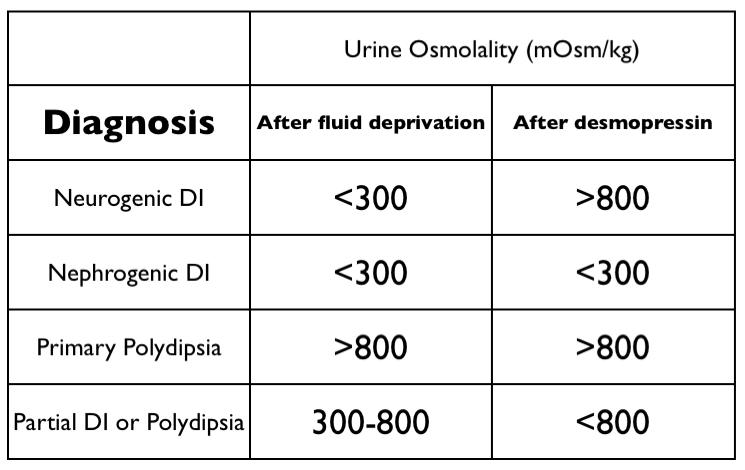
~ if serum osmolality > 305 mOsmol/kg = diabetes insipidus
~ urine osmolality < 300 mOsmol/kg after fluid deprivation and rising to above 800mOsmol/kg after desmopressin = cranial diabetes insipidus
~ urine osmolality < 300 mOsmol/kg after fluid deprivation and remains < 300mOsmol/kg after desmopressin = nephrogenic diabetes insipidus
~ urine osmolality > 800 mOsmol/kg after fluid deprivation without desmopressin = primary polydipsia
~ urine osmolality between 300 and 800 mOsmol/kg = partial DI/polydipsia
- patient should be weighed hourly
- plasma osmolality is measured 4 hourly
- urine volume and osmolality 2 hourly
- then give 2microgram desmopressin IM and check urine volume & osmolality and plasma osmolality over next 4 hours
- Interpretation
~ if serum osmolality > 305 mOsmol/kg = diabetes insipidus
~ urine osmolality < 300 mOsmol/kg after fluid deprivation and rising to above 800mOsmol/kg after desmopressin = cranial diabetes insipidus
~ urine osmolality < 300 mOsmol/kg after fluid deprivation and remains < 300mOsmol/kg after desmopressin = nephrogenic diabetes insipidus
~ urine osmolality > 800 mOsmol/kg after fluid deprivation without desmopressin = primary polydipsia
~ urine osmolality between 300 and 800 mOsmol/kg = partial DI/polydipsia
Sunday, 20 May 2012
Takayasu's arteritis
- an inflammatory and stenotic disease of medium and large-sized arteries characterized by strong predilection for the aortic arch and its branches
- a.k.a aortic arch syndrome
- 2-3 per million
- 80% are women and mean age of onset is 30 years
- panarteritis with inflammatory mononuclear cell infiltrates and occasionally giant cells
- presents with fever, night sweats, arthralgia, anorexia and weight loss
- pulses are commonly absent in the involved vessels, particularly subclavian artery
- hypertension occurs in 32-93% of patients and contribute to renal, cardiac and cerebral injury
- diagnosis is confirmed by the characteristic pattern on arteriography which includes irregular vessel walls, stenosis, post stenotic dilatation, aneurysm formation, occlusion and evidence of increased collateral circulation
- corticosteroid with the addition of steroid sparing agents such as methotrexate or azathioprine are mainstay of treatment
- a.k.a aortic arch syndrome
- 2-3 per million
- 80% are women and mean age of onset is 30 years
- panarteritis with inflammatory mononuclear cell infiltrates and occasionally giant cells
- presents with fever, night sweats, arthralgia, anorexia and weight loss
- pulses are commonly absent in the involved vessels, particularly subclavian artery
- hypertension occurs in 32-93% of patients and contribute to renal, cardiac and cerebral injury
- diagnosis is confirmed by the characteristic pattern on arteriography which includes irregular vessel walls, stenosis, post stenotic dilatation, aneurysm formation, occlusion and evidence of increased collateral circulation
- corticosteroid with the addition of steroid sparing agents such as methotrexate or azathioprine are mainstay of treatment
Friday, 18 May 2012
Paroxysmal cold hemoglobinuria
- rare form of AIHA occuring mostly in children
- usually triggered by a viral infection, usually self limited
- characterised by the involvement of Donath-Landsteiner antibody
- in vitro, this antibody has unique serologic feature: it has anti-P specificity and it binds to red cells only at low temperature (optimally at 4°C). When temperature is shifted to 37°C, lysis of red cells take place in the presence of complement
- consequently, in vivo there is intravascular hemolysis resulting in hemoglobinuria
- also presents with rigor and bone pain
- supportive treatment inlcuding blood transfusion is needed to control the anemia

- usually triggered by a viral infection, usually self limited
- characterised by the involvement of Donath-Landsteiner antibody
- in vitro, this antibody has unique serologic feature: it has anti-P specificity and it binds to red cells only at low temperature (optimally at 4°C). When temperature is shifted to 37°C, lysis of red cells take place in the presence of complement
- consequently, in vivo there is intravascular hemolysis resulting in hemoglobinuria
- also presents with rigor and bone pain
- supportive treatment inlcuding blood transfusion is needed to control the anemia
Thursday, 17 May 2012
Histoplasmosis
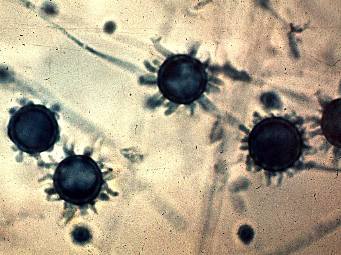
- caused by Histoplasma capsulatum, a thermal dimorphic soil fungus
- a.k.a Darling's disease (Histoplasma discovered in 1905 by Darling)
- infection follows inhalation of microconidia. Once they reach the alveolar space, microconidia are rapidly recognised and engulfed by alveolar macrophages
- clinical spectrum of histoplasmosis ranges from asymptomatic infection (immunocompetent individuals with low level of exposure) to life threatening illness (immunocompromised - progressive disseminated histoplasmosis)
- it causes TB-like illness
- fungal culture remains the gold standard diagnostic test for histoplasmosis (Groccott stain)
- treatment is indicated for progressive disseminated histoplasmosis, chronic pulmonary histoplasmosis or symptomatic patients with acute pulmonary histoplasmosis
- drug: liposomal amphotericin B or itraconazole
- a.k.a Darling's disease (Histoplasma discovered in 1905 by Darling)
- infection follows inhalation of microconidia. Once they reach the alveolar space, microconidia are rapidly recognised and engulfed by alveolar macrophages
- clinical spectrum of histoplasmosis ranges from asymptomatic infection (immunocompetent individuals with low level of exposure) to life threatening illness (immunocompromised - progressive disseminated histoplasmosis)
- it causes TB-like illness
- fungal culture remains the gold standard diagnostic test for histoplasmosis (Groccott stain)
- treatment is indicated for progressive disseminated histoplasmosis, chronic pulmonary histoplasmosis or symptomatic patients with acute pulmonary histoplasmosis
- drug: liposomal amphotericin B or itraconazole
Subacute thyroiditis
- a.k.a De Quervain's /granulomatous / viral thyroiditis
- peak incidence 30-50 years, women affected 3 times more common than men
- during initial phase of follicular destrution, there is release of Tg and thyroid hormones, leading to increased circulating T4 and T3 and suppression of TSH (during this stage, radioactive iodine uptake is low or undetectable)
- after several weeks, the thyroid is depleted of stored thyroid hormone and a phase of hypothyroidism typically occurs
- finally thyroid hormone and TSH levels return to normal as disease subsides
- presents with painful and enlarged thyroid, sometimes fever
- malaise and URTI may precede the thyroid related features by several weeks
- patient typically complained of sore throat and pain is often radiated to jaw or ear
- ESR and CRP are markedly elevated
- treatment: NSAIDs (eg: aspirin 600mg QID), or prednisolone 40-60mg gradually tapered over 6-8 weeks
- thyroid function should be monitored every 2-4 weeks using TSH and unbound T4 levels

- peak incidence 30-50 years, women affected 3 times more common than men
- during initial phase of follicular destrution, there is release of Tg and thyroid hormones, leading to increased circulating T4 and T3 and suppression of TSH (during this stage, radioactive iodine uptake is low or undetectable)
- after several weeks, the thyroid is depleted of stored thyroid hormone and a phase of hypothyroidism typically occurs
- finally thyroid hormone and TSH levels return to normal as disease subsides
- presents with painful and enlarged thyroid, sometimes fever
- malaise and URTI may precede the thyroid related features by several weeks
- patient typically complained of sore throat and pain is often radiated to jaw or ear
- ESR and CRP are markedly elevated
- treatment: NSAIDs (eg: aspirin 600mg QID), or prednisolone 40-60mg gradually tapered over 6-8 weeks
- thyroid function should be monitored every 2-4 weeks using TSH and unbound T4 levels
Wednesday, 16 May 2012
Tardive dyskinesia
- developed months to years after initiation of neuroleptic medications
- choreiform movements involving mouth, lips and tongue
- abnormal movement may develop after stopping the offending agent
- atypical antipsychotics has lower risk of TD
- treatment consists of stopping the offending agent
- TD remits within 3 months of stopping the drug and most patients gradually improve over the course of several years

- choreiform movements involving mouth, lips and tongue
- abnormal movement may develop after stopping the offending agent
- atypical antipsychotics has lower risk of TD
- treatment consists of stopping the offending agent
- TD remits within 3 months of stopping the drug and most patients gradually improve over the course of several years
Sunday, 13 May 2012
Peripartum cardiomyopathy
- develops during the last trimester or within first 6 months after pregnancy
- between 1:3000 and 1:15,000 deliveries
- risk factors are increased maternal age, increased parity, twin pregnancy, malnutrition, tocolytics, and pre-eclampsia
- cause is unknown
- management is supportive with sodium restriction, digoxin, diuretics and vasodilators (eg:hydralazine)
- increased incidence of thrombosis and common to anticoagulate patient with heparin
- risk of recurrence in future pregnancy is 40%
- prognosis is reasonable with recovery of ventricular function in up to 50% patients

- between 1:3000 and 1:15,000 deliveries
- risk factors are increased maternal age, increased parity, twin pregnancy, malnutrition, tocolytics, and pre-eclampsia
- cause is unknown
- management is supportive with sodium restriction, digoxin, diuretics and vasodilators (eg:hydralazine)
- increased incidence of thrombosis and common to anticoagulate patient with heparin
- risk of recurrence in future pregnancy is 40%
- prognosis is reasonable with recovery of ventricular function in up to 50% patients
Loiasis
- filarial infection caused by Loa loa (African eye worm)
- transmitted by Chrysops fly
- adult parasites live in subcutaneous tissue
- microfilariae circulate in blood with a diurnal periodocity
- subconjunctival migration of an adult worm
- Calabar swelling (localised area of angioedema and erythema developing on extremities) is thought to result from a hypersensitivity reaction to adult worm antigens
- definitive diagnosis requires the detection of microfilariae in peripheral blood or isolation of adult worm from the eye or subcutaneous biopsy
- eosinophilia suggest the diagnosis
- diethylcarbamazine (DEC) for 3 weeks


- transmitted by Chrysops fly
- adult parasites live in subcutaneous tissue
- microfilariae circulate in blood with a diurnal periodocity
- subconjunctival migration of an adult worm
- Calabar swelling (localised area of angioedema and erythema developing on extremities) is thought to result from a hypersensitivity reaction to adult worm antigens
- definitive diagnosis requires the detection of microfilariae in peripheral blood or isolation of adult worm from the eye or subcutaneous biopsy
- eosinophilia suggest the diagnosis
- diethylcarbamazine (DEC) for 3 weeks
Subscribe to:
Posts (Atom)